
The Physical Economy Briefing, August 2026
Each month the Systemiq Capital team shares what it's seeing across the systems we invest in, on LinkedIn, on stages and in the field. This is the monthly recap, with the month's thinking gathered in one place. Follow the team for the running commentary; the originals are linked throughout.
The month in one line
Making silicon smaller has stopped paying, so the gains in compute have moved into everything around the chip. Much of the rest of the month follows the same pattern, in farming, in biosecurity and in industrial AI.
Electrification & Compute: the next decade of compute gains sits off the chip
For fifty years, computing got faster because silicon transistors got smaller. That has stopped paying.
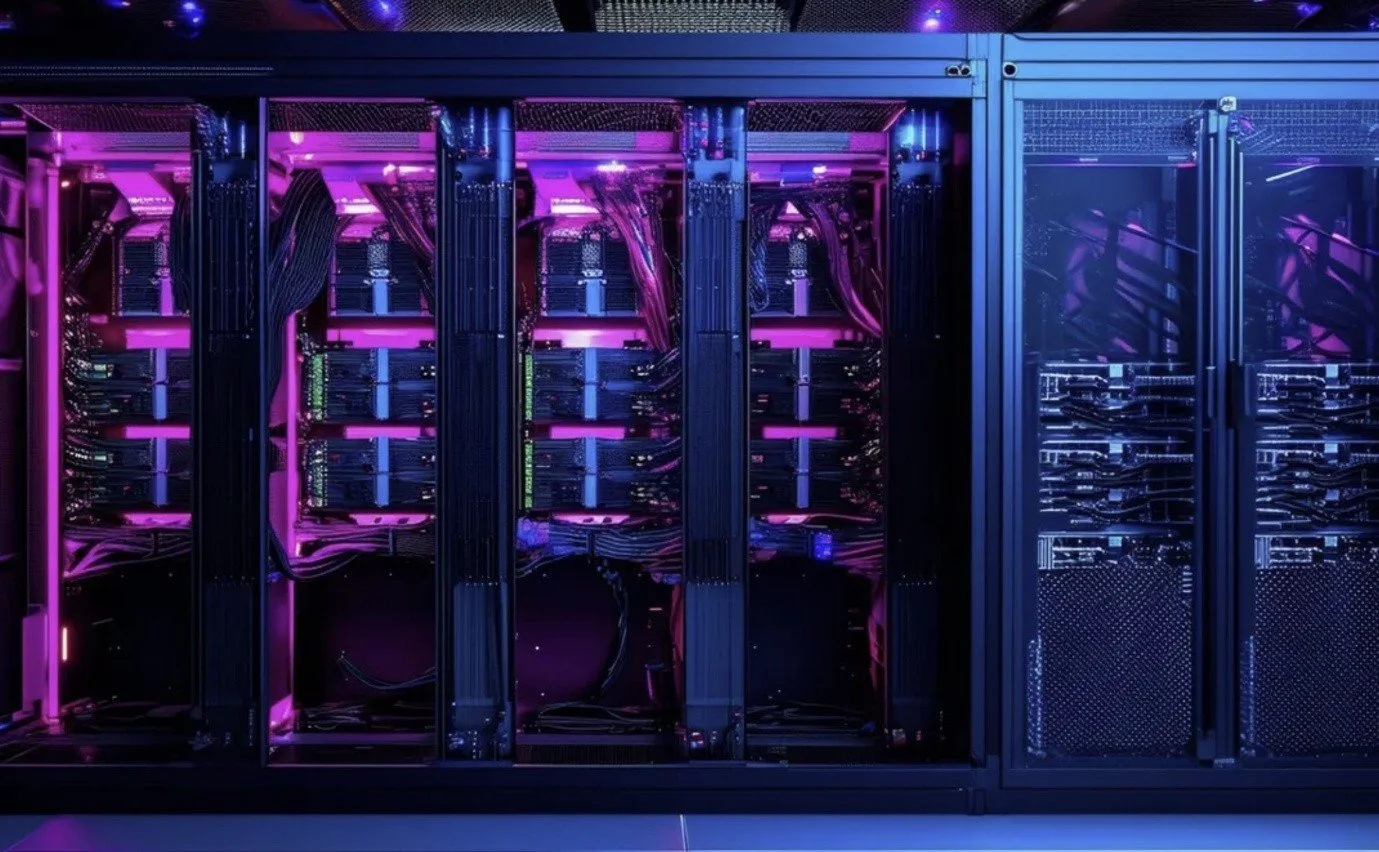
In "Beyond Silicon", Jasper Wigley sets out where the gains are migrating instead: into how chips are packaged, how data moves between them, how systems remember, how power reaches the processor, and in time into machines that are not conventional silicon at all.
Compute is the intelligence substrate of the physical economy. A physical input becomes information, computation happens in the middle, and a physical output comes back. A sprayer reads a weed in a field and decides to fire. A grid balances supply and demand minute by minute. A satellite decides which of its images matter before sending a byte to the ground. That substrate runs from the chip package to the rack to the grid, out to the vehicle, the factory line and into orbit. This is why advanced computing sits inside Systemiq Capital's Electrification theme, and why in practice it is the foundation the rest of the portfolio stands on.
For the first time in fifty years, the cost and energy curve of that substrate is uncertain. AI has driven the first increase in power demand across the developed world in two decades, and data centres are on track to nearly double their electricity consumption by 2030. The same grids also have to electrify transport, industry and buildings. Even inside the data centre, more than 30% of the electricity entering the building is wasted before it reaches a processor, lost across successive conversion stages and voltage regulators. Hyperscalers buy efficiency because their margins, their capacity to grow and increasingly their licence to operate depend on it.
Systemiq Capital backs IP-rich, asset-light companies doing one of two things: bending the demand curve on compute energy, or opening capabilities that conventional silicon cannot reach. The first two investments bookend the rack. Mixx Technologies replaces the copper connections inside frontier AI systems with light, bringing co-packaged optics into the rack for far more bandwidth per watt. Claros designs a voltage regulator small enough to sit directly underneath the AI chip, so power arrives where it is needed rather than being lost as heat on the way. Both are design companies whose manufacturing is carried by industry partners, and both were founded by teams who had already shipped this class of technology into production.
Four themes are shaping the pipeline this year:
Inference is moving to the edge. Training frontier models stays in hyperscale data centres. Using them increasingly happens where the data is, on the robot arm, in the vehicle, at the factory line, on the satellite. Latency matters when a machine is making a physical decision, sensitive data is better processed where it is generated, and every watt handled at the edge is a watt the grid never has to deliver to a data centre. Portfolio company Archetype AI runs its physical agents on machines themselves rather than in the cloud.
Memory is becoming the bill. The cost of an AI answer is increasingly set less by how fast the chip thinks than by how much the system can remember and how quickly it can fetch it. Prefill and decode are pulling apart across different hardware, and a new memory hierarchy is forming, from HBM stacked on the GPU down through CXL-attached system memory and flash.
Packaging and connectivity are converging. Packaging capacity, not chip design, is now among the tightest constraints on AI hardware supply. Co-packaged optics was a contrarian bet when Systemiq Capital invested in Mixx and entered production at the largest players this year. The open question is who supplies the ecosystem around it: the lasers, the fibre attach, the connectors, the test and reliability infrastructure.
Power electronics have found their own Moore's law. Silicon carbide and gallium nitride handle high voltages and heat at a fraction of the losses of ordinary silicon, and each generation gets denser and more efficient. That curve made electric vehicles viable and is now moving data centres to 800V DC distribution, running from the grid connection down to regulators sitting millimetres from the chip.
The full argument, including where the companies are coming from and what the winning teams have in common, is in "Beyond Silicon".
Applied AI: the industries software never reached
Gemma Bloemen has joined the investment team full time to lead Systemiq Capital's Applied AI thesis, and used the announcement to set out what she is looking for (read her LinkedIn post and our article about SC most recent promotions here.)
Software reorganised consumer life. Car hailing, food delivery, renting a stranger's spare room, arranging social care from a phone. Gemma worked on that shift as an operator at Uber in its early days and later at Elder. The industrial world mostly stayed put. Software could book you a ride, but it could not change how a factory line, a power grid or a construction site actually worked. AI can, and that is why she thinks the next decade belongs to the physical industries software never reached.
AI is a broad term, so here are the areas and some of the example themes she is looking at:
Transforming physical industries and critical infrastructure
Making factories produce more without new floor space
Compressing engineering and simulation cycles from weeks to hours
Augmenting scarce labour in critical roles such as electricians
Cutting waste across supply chains, the built environment and e-commerce
Generating data and visibility that didn't exist before
Improved earth observation and geospatial
Pricing physical risk before it hits the balance sheet
Reading energy markets and the grid in real time
Building more resilient infrastructure
Reshoring clean supply chains and other critical industries
Catching wildfires and floods before they spread
Helping the built environment adapt to changing physical conditions
Cybersecurity for energy and critical infrastructure
The companies that win in the physical world look different from pure software companies. Around half the companies Systemiq Capital backs have a hardware component: sensors that gather data, bespoke hardware with a software layer on top, or fully embedded robotics. The firm does not invest in first-of-a-kind deployments or early science, and treats hardware as a moat rather than a reason to walk away. Security and trust are non-negotiable in these markets, so many of the products run on-premise, which calls for different architecture and different compute. And these companies rarely ship a tool. They build the operating system, take over part of the organisation, and own the output.
Keep your eyes open for more info on our Applied AI thesis over the coming weeks!
We led eComID's $17m seed round
Systemiq Capital led the $17m seed round in eComID, a Stockholm-based software company founded by Oscar Rundqvist. Gemma led the deal and shared the news on LinkedIn, where she wrote about meeting Oscar and what convinced her to back the team (read her post, and why we invested in eComID.).
eComID is building the shopper identity and context layer for fashion e-commerce. Brands buy a single subscription that sits on top of their existing storefront, recognises a shopper, understands their size, fit and preferences, and personalises the experience from the first click. The underlying thesis is that commerce has been constrained less by technology than by context. Shoppers guess their size, over-order and return, and the brand absorbs the cost. eComID closes that gap before the purchase is made. Company announcement here.

Decoding Nature: organic acreage is a commercial opportunity and a technology laboratory
Converting conventional US farmland to organic is an economics decision first. George Darrah spent a day in the field with Justin Bruch, who does this at scale (read his post).
US farmland has appreciated by an average of 5.5% a year over the last thirty years, though not in a straight line. Farming soy and corn conventionally has historically thrown off around 2.5% unlevered cash yield on land value. Organic can add roughly another 150 basis points on top, if it is done well.
Doing it well is hard. The optimal organic recipe varies with each farm's local context, so farm management has to be sophisticated, down to running a 300kW weed zapper without zapping yourself.
Demand is not the constraint. The US imports a large share of its organic grain, historically around half its organic corn and up to 80% of its organic soybeans, from countries such as Romania and Turkey. Domestic acreage could roughly double on existing demand alone. Conventional broad-acre crops, by contrast, sit in oversupply.
Organic is not where US conventional agriculture ends up. It is where commercially minded farmers test frontier techniques that cut input costs and raise yields.
Decoding Nature: biosecurity is industrial infrastructure that only becomes visible when it fails
Biosecurity already runs at industrial scale and gets almost no attention. It becomes visible when something goes wrong. The operation to keep a parasitic fly out of the US involves military aircraft and factories breeding sterile flies in bulk. Wild flies breached the biological barrier in Panama in 2022, and billions of dollars of US livestock are now at risk (read George's post, article here).
In this case the cost lands on hamburger prices. The same category of infrastructure sits between biology's commercial upside and its downside, and releasing an AI-enhanced pathogen into the environment would be far worse. Unlocking biology's abundance without unleashing the dark side of biology could be the balancing act of the century.
Systemiq Capital is a venture capital firm backing audacious founders redefining the physical economy, building category-defining companies in systems we understand deeply. The firm invests at Series A +/– across the UK, Europe and the US, focused on Electrification, Decoding Nature and Applied AI.
Frequently asked questions
What does Systemiq Capital invest in? Systemiq Capital backs founders redefining the physical economy, building category-defining companies in Electrification, Decoding Nature, and Applied AI.
What stage does Systemiq Capital invest at? Systemiq Capital invests at Series A +/–, across the UK, Europe, and the US.
What is "physical economy" venture capital? Physical economy venture capital refers to investment in companies building into the systems that power, produce, and move the real world — energy, industrial infrastructure, natural resource production, and the compute and intelligence layered on top of them. It is distinct from software-only or consumer-first venture investing, and requires deep understanding of the market forces, infrastructure dynamics, and system conditions that shape a company's path to scale.
What are Systemiq Capital's three investment verticals? Electrification (how energy is traded, managed, and used, and how compute is built to run on it), Decoding Nature (technology and nature combined to act on information not previously available, driving more productive and resilient natural resource production), and Applied AI (intelligence applied across industrial systems, infrastructure, and complex operating environments).
What makes Systemiq Capital different from other venture firms? Systemiq Capital's edge comes from systems understanding, a deep grasp of the market forces, industry dynamics, and system conditions that shape a company's path to scale and commercial value, combined with specialist expertise, relevant networks, and commercially grounded support for founders.
Does Systemiq Capital invest in hardware? Around half the companies Systemiq Capital backs have a hardware component: sensors, bespoke hardware with a software layer on top, or fully embedded robotics. The firm does not invest in first-of-a-kind deployments or early science, and treats hardware as a source of defensibility rather than a reason to avoid a company.
Why does Systemiq Capital invest in compute infrastructure? Compute sits inside Systemiq Capital's Electrification vertical, which covers how energy is traded, managed and used, and how compute is built to run on it. As gains from shrinking silicon plateau, performance is increasingly won in packaging, power delivery, memory architecture and non-silicon computing, all of which are physical infrastructure problems.